


Social entrepreneurs and innovators, leaders and representatives of social enterprise resource institutions, civil society groups, business sector, government and multilateral agencies have gathered together at the 4th Social Enterprise Advocacy and Leveraging (SEAL) Asia Conference in UN Conference Center, Bangkok, Thailand from March 22 to 23, 2023. The said event’s theme is “Social Entrepreneurship, Innovation, and Partnerships: Towards Inclusive Recovery and Accelerating the Sustainable Development Goals”, which is organized as a pre-event to the Asia Pacific Forum for Sustainable Development (APFSD) by the Institute for Social Entrepreneurship in Asia (ISEA), the United Nations Economic and Social Commission for Asia and the Pacific (UNESCAP) and the Catalyst 2030, in partnership with the Asia Pacific Regional Civil Society Engagement Mechanism – Social and Community Enterprise (APRCEM-SCE) Constituency, Association of Progressive Communications (APC), the Oxfam in Asia, the Embassy of Sweden in Bangkok and the Social Enterprise Thailand (SE Thailand).

The Day 1 of the Conference featured special guests as part of the Opening session. Moderated by ISEA President/Co-Chair, Catalyst 2030 ASEAN Chapter Focal Point/APRCEM-Social and Community Enterprises Constituency, Dr Marie Lisa Dacanay, the session was welcomed by Dompet Dhuafa Chairperson, Mr. Rahmad Riyadi. He is also the Co-Chair of ISEA. Ms. Napa Setthakorn, Director, Office of Social Enterprise Promotion (Thailand) presented the Social Enterprises in Thailand.
The conference’s Session 1 which is themed, “Towards Nurturing Transformational Partnerships and Women’s Economic Empowerment in Agricultural Value Chains” is a two-part panel session featured experiences and perspectives of small and medium enterprises, social enterprises, corporate agribusinesses, and government multilateral agencies on the Benchmarks and Guidelines for Transformational Partnerships and Women’s Economic Empowerment in Agricultural Value Chains.
The first panel featured Ms. Charlene Tan, Founder and CEO of Good Food Community (Philippines); Mr. Paulus Sigit, Supervisor of Toko Trubus (Indonesia); and Ms. Ho Thu Phuong Anh, Director of Vien Minh Company (Vietnam). They each discussed their enterprise/company profile, the characteristics of their partner communities, and the impacts of the COVID-19 pandemic on their operations, before delving into their experience implementing the BTP WEE in AVCs. The panel of speakers also shared the challenges, opportunities, and lessons learned in their adoption of the Benchmarks. The first panel was moderated by Ms. Pham Oanh Kieu, Founder and CEO of the Centre for Social Initiatives Promotion (CSIP) and Co-Convener of the Women’s Empowerment, Livelihoods and Food in Agricultural Value Chains (WE LIVE FOOD) Platform.
The second panel session featured Ms. Maria Katrina Bayog-Mercado, CSR Manager of PILMICO & Gold Coin Group (Philippines); Ms. Maria Pamela Castro, Manager of Pilipinas Shell (Philippines); Mr. Miguel Musngi, Assistant Director of Poverty Eradication and Gender Division, ASEAN Secretariat; and Ms. Sudha Gooty, Program Manager of Catalyzing Women’s Entrepreneurship, Social Development Division, UN ESCAP. Moderated by Mr. Sohail Aziz, Programme Management Lead from Oxfam Great Britain, the session was focused on the perspectives of different stakeholders on the development and usefulness of the Benchmarks and Transformational AVC Guidelines and the opportunities for sustaining and scaling the initiative in Southeast Asia. Mr. Aziz also gave a brief background on the Transformational AVC Guidelines, highlighting its 5 elements: (1) Innovation towards food security, resilience, and empowerment of small producers; (2) Women’s economic empowerment (WEE) across all functions of value chain; (3) Sustainable consumption and production towards a climate resilient and green economy; (4) Recognition and support for social enterprises and exclusive businesses as enabling partners; and (5) Cross-sectoral and multi-stakeholder platforms towards accelerating the sustainable development goals (SDGs).

While Ms. Bayog-Mercado of PILMICO & Gold Coin Group and Ms. Castro of Pilipinas Shell each introduced their company and their WEE initiatives, highlighting the alignment and relevance of the Transformational AVC Guidelines to their work, Mr. Musngi from the Poverty Eradication and Gender Division of the ASEAN Secretariat and Ms. Gooty from the Catalyzing Women’s Entrepreneurship, Social Development Division at UN ESCAP shared potential opportunities and engagement points for applying the Benchmarks and the Transformational AVC Guidelines in their organization’s work. Mr. Musngi discussed several ASEAN frameworks and key initiatives on SDGs that provide the mandate for ASEAN’s strengthened stakeholder engagement, specifically on gender equality and women empowerment and rural development initiatives. He briefly discussed the ASEAN’s 10-year development roadmap, the ASEAN Gender Mainstreaming Strategic Framework, and ASEAN’s common platforms on SDGs to possibly introduce the Benchmarks and Guidelines. Similarly, Ms. Gooty also shared opportunities on where the Benchmarks and Guidelines can be introduced in UNESCAP’s work, particularly in the ASEAN region. She discussed the Policy Toolkit on Strengthening Women’s Entrepreneurship in National MSME Policies and Action Plans, led by the ASEAN Coordinating Committee on Micro, Small, and Medium Enterprises (ACCMSME) and ESCAP sharing that this has been designed as a practical tool to enable MSME agencies and other relevant stakeholders to assess gaps, take stock of opportunities, and design gender-focused interventions through national policies to advance women’s entrepreneurship in the ASEAN region. Finally, she highlighted the relevance of the Benchmarks and the Transformational AVC Guidelines in complementing this toolkit, and laying out the design considerations for future country-level interventions targeting women-led MSMEs and for forming the basis for an annual action plan for women’s entrepreneurship to strengthen policy support and create a more enabling environment and ecosystem.
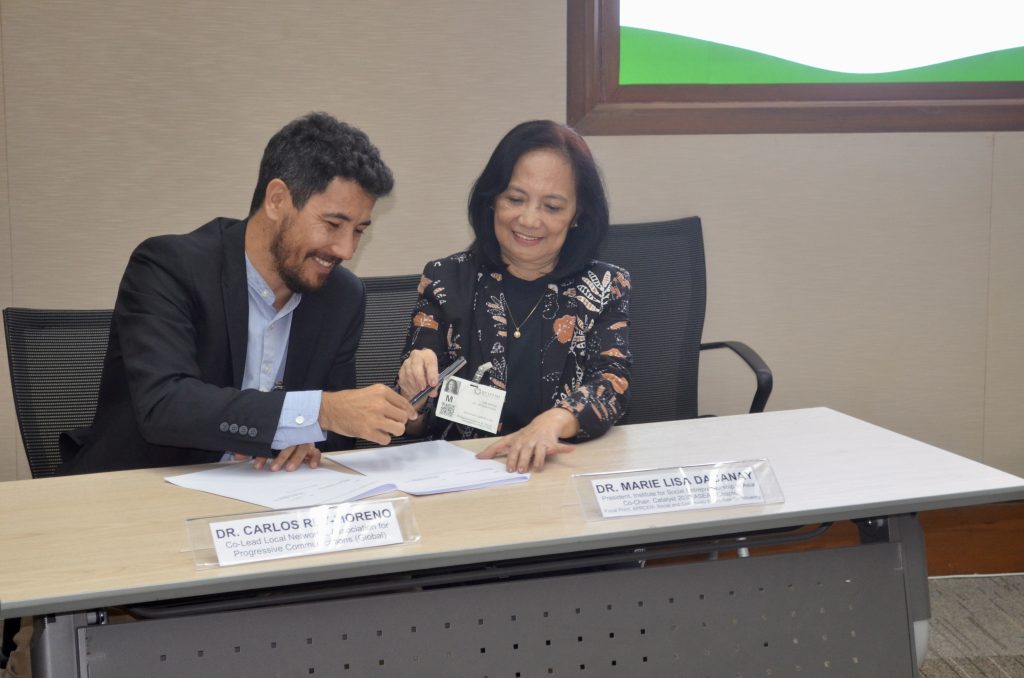
Social Entrepreneurship in Asia after the launch the Technological Innovations for Sustainable Development Platform focused on seeding and enabling community networks to bridge the digital divide
Day 1 Session 2: A panel session on Seeding and Enabling Community Networks towards Bridging the Digital Divide was conducted featuring the following speakers and moderator: Mr. Gustaff Harriman Iskandar of Common Room (Indonesia), Dr. Kanchana Kanchanasut, Director of Internet Education and Research Laboratory, Asian Institute of Technology (Thailand), Dr. Carlos Rey-Moreno, Co-Lead Local Networks, Association for Progressive Communications (Global), and Dr. Albert Teo (Moderator), Dean of the School of Management, Tung Wah College (Hong Kong), who also served as co-convener of the Technological Innovations for Sustainable Development Platform. After the panel session, a video presentation was played for the hybrid (onsite and online) participants as an introduction to the launch of the Technological Innovations for Sustainable Development (TISD) Platform focused on seeding and enabling community networks to bridge the digital divide, which will be co-convened by the Association for Progressive Communications (APC), Angels of Impact, and ISEA. After the launch, a Memorandum of Agreement (MOA) Signing between the APC and ISEA was led by ISEA President, Dr Marie Lisa Dacanay and Dr. Carlos Rey-Moreno, Co-Lead Local Networks of APC.
Day 1 Session 3: Engaging Youth in Social Entrepreneurship and Innovation towards Rural Revitalization and Accelerating the SDGs – The plenary was co-organized by the Rural Revitalization, Youth and Social Entrepreneurship (RRYSE) Platform that was launched in July 2022 and co-convened by Sources for Action (China), Philippine Rural Reconstruction Movement (Philippines), Rural Reconstruction Nepal (Nepal). It featured young social entrepreneurs and enabling programs for youth towards rural revitalization and sustainable development. The pool of speakers were: Mr. Ganyong Wei, Program Manager, Sources for Action (China); Mr. Ronnel Acio, Manager, Vizcaya Fresh (Philippines); Ms. Enusha Khadka, CEO, Institute of Innovation and Quality Assurance (Nepal); with Mr. Marlon Palomo, Executive Director, Philippine Rural Reconstruction Movement/Co-Convener, RRYSE Platform as moderator.
Day 1 Session 4: Fair Trade and Gender-just Skills Education Towards Decent Work for All in Sustainable Value Chains – This plenary was co-organized by Decent Work for All in Sustainable Value Chains Platform co-convened by World Fair Trade Organization-Asia (WFTO-Asia), the Asia-South Pacific Association for Basic and Adult Education (ASPBAE) and Azad Foundation that will deliberate on the ecosystem support for production, access to markets, gender-just re-skilling and the role of men in enabling environments for women’s access to decent work in sustainable value chains. The session featured the following speakers: Mr. Jake Almanzor, Volunteering, Internships and Partnerships (VIP) Coordinator, World Fair Trade Organization Asia (Thailand); Ms. Dolon Ganguly, Member of National Leadership Team and Chief Functionary, Azad Foundation (India); Mr Satish Kumar Singh, Founding Member, Forum to Engage Men Network and Men’s Action Stopping Violence Against Women (India); and Moderator: Ms. Cecilia Soriano, Regional Policy and Advocacy Coordinator, Asia South Pacific Association for Basic and Adult Education
The Day 1 of the Conference concluded with Reflections presented by Mr. Norby Salonga of the Lasallian Center for Social Entrepreneurship and Enterprise Development (Philippines), an ISEA member organization.

The Day 2 Opening Session featured Keynote Addresses from Khun Mechai Viravaidya, the Founder and Chair of Population and Development Association followed by Mr. Jason Jacobs, Co-Chairperson, Catalyst 2030 Australasia Chapter and Director of Te Mana Consortium. The session is moderated by Ms. Ana Budi Rahayu, Director of Bina Swadaya Konsultan.
Day 2 Session 6: Social Enterprise Initiatives and Enabling Mechanisms towards Inclusive Recovery, Building Back Fairer and Accelerating the Achievement of the SDGs in Thailand – This session was co-organized by Social Enterprise Thailand featuring significant social enterprise initiatives and the opportunities and challenges faced by the sector in engaging government to implement the new Social Enterprise Law as an enabling policy for social enterprises as partners in inclusive recovery and accelerating the achievement of the SDGs. The panelists included: Mr. Peetachai Dejkraisak, Board Member and Secretary, SE Thailand and CEO and Founder, Jasberry; Mr. Thanawut Supangkaratana, SE Operations Professional, Office of Social Enterprise Promotion; Mr. Sunit Shrestha, Managing Director, ChangeFusion; and Dr. Boonwara Sumano, Senior Research Fellow, Thailand Development Research Institute. The session is moderated by Tarlapraporn Punyorin, General Manager of SE Thailand.
Day 2 Session 7: Catalyzing the Recovery of Social and Community Enterprises for Transformation (CRESCENT): Towards Inclusive Recovery and Accelerating the Sustainable Development Goals – The COVID-19 pandemic drastically changed the situation and context of social enterprises. Many SEs faced drastic cuts in revenues, slowed down or even shut down their operations even as a significant number innovated their way towards ensuring they were able to sustain their services and partnerships with the poor and marginalized sectors who were affected the most. A number of social enterprises pivoted to other value chains or diversified their services. Meanwhile the ranks of the poor and marginalized have swelled and new needs have surfaced during the pandemic creating an even bigger demand for social enterprises to expand their coverage and for new social enterprises to be set up. COVID-19 CRESCENT initiative was conceived to address the major challenges brought about by the pandemic and to help develop new and assist existing social enterprises to recover, reposition, pivot and innovate. This plenary aimed to share the evolving CRESCENT initiative co-developed by SE stakeholders in Asia Pacific and explore the opportunities and potentials for partnership with key stakeholders in the region towards inclusive recovery, building back fairer and accelerating the SDGs. The Panelists were: Mr. Jonathan Wong, Chief of Technology and Innovation, TIID UNESCAP – The role of social enterprises in addressing the challenges and gaps of SDG implementation in the Asia Pacific region; Dr. Marie Lisa Dacanay, President, ISEA – CRESCENT: An Asia Pacific response towards inclusive recovery and accelerating the SDGs; and Ms. Jeroo Billimoria, Founder, Catalyst 2030 – Financing social entrepreneurship initiatives towards inclusive recovery and accelerating the SDGS: Opportunities and challenges. The session was moderated by Dr. Laina Greene, Founder of Angels of Impact.
The Closing Session of the SEAL Conference was moderated by Ms. Ana Marina Tan, Director of Ateneo Center for Social Entrepreneurship which focused on the Conference Declaration. Closing Messages were also delivered by the event co-organizers.
Learn more about the 4th SEAL Asia Conference in this link: https://www.isea-group.net/fourth-seal-asia-conference/